

Losing weight is one of the most common health goals around the world. But despite its popularity, there’s no one‑size‑fits‑all answer for how many calories you should eat to lose weight. The truth is, your ideal calorie intake depends on your age, gender, body composition, activity level, and weight loss goals.
In this comprehensive guide, we’ll break down:
- How calories relate to weight loss
- How to calculate your calorie needs
- How to create a sustainable calorie deficit
- Tips to adjust your diet for healthy weight loss
Whether you’re just getting started with your fitness journey or looking to fine‑tune your eating habits, this post will help you understand what calorie intake works best for you.
📊 What Are Calories and Why Do They Matter?
Calories are units of energy found in the food and drinks you consume. Your body uses calories to power everything you do — from breathing and sleeping to walking and working out.
The Basics
- Calories In = the calories you consume
- Calories Out = the calories your body uses
Weight loss occurs when you consume fewer calories than your body needs — creating a calorie deficit.
👉 If you want a deeper explanation of maintenance calories and metabolism, check out our article What Is Basal Metabolic Rate (BMR)?.
⚖️ How Many Calories Should You Eat to Lose Weight?
There’s no universal calorie target that fits everyone. That’s because calorie needs vary based on:
- Age
- Sex
- Height & weight
- Activity level
- Metabolic health
However, there are general guidelines to help you estimate your calorie requirements for weight loss.
General Calorie Targets for Weight Loss
| Goal | Estimated Daily Calories |
|---|---|
| Mild Weight Loss (0.25–0.5 lb/week) | Maintenance − 250 calories |
| Moderate Weight Loss (0.5–1 lb/week) | Maintenance − 500 calories |
| Aggressive Weight Loss (1–2 lbs/week) | Maintenance − 750 to 1000 calories* |
*Not recommended for everyone — especially beginners or people with health conditions.
Most experts recommend a calorie deficit of 500 calories per day for safe, long‑term weight loss. This typically leads to about 1 pound (≈0.45 kg) of weight loss per week.
Note: Going below 1200 calories/day for women and 1500 calories/day for men without medical supervision can lead to nutrient deficiencies and muscle loss.
🧮 How to Calculate Your Daily Calorie Needs
To know how many calories you should eat to lose weight, you first need to calculate your maintenance calories — the number of calories your body needs to maintain your current weight.
Step 1: Calculate Your Basal Metabolic Rate (BMR)
Your BMR is the number of calories your body needs at rest — just to keep your heart pumping and your lungs breathing.
There are formulas for estimating BMR like the Mifflin‑St Jeor Equation:
👉 For Men:
BMR = 10 × weight (kg) + 6.25 × height (cm) − 5 × age + 5
👉 For Women:
BMR = 10 × weight (kg) + 6.25 × height (cm) − 5 × age − 161
Step 2: Multiply by Your Activity Level
After calculating your BMR, multiply it by your activity level:
| Activity Level | Multiplier |
|---|---|
| Sedentary (little exercise) | × 1.2 |
| Lightly Active (light exercise) | × 1.375 |
| Moderately Active (moderate exercise) | × 1.55 |
| Very Active (hard exercise) | × 1.725 |
| Extremely Active (intense training) | × 1.9 |
This gives you your Total Daily Energy Expenditure (TDEE) — the number of calories you burn each day.
Step 3: Apply a Calorie Deficit
To lose weight:
- Subtract 250–500 calories from your TDEE for gradual weight loss
- Subtract up to 1000 calories for faster weight loss (only with professional guidance)
📌 Example:
- TDEE = 2400 calories
- Target Calories for Weight Loss = 2400 − 500 = 1900 calories/day
This figure becomes your calorie target.
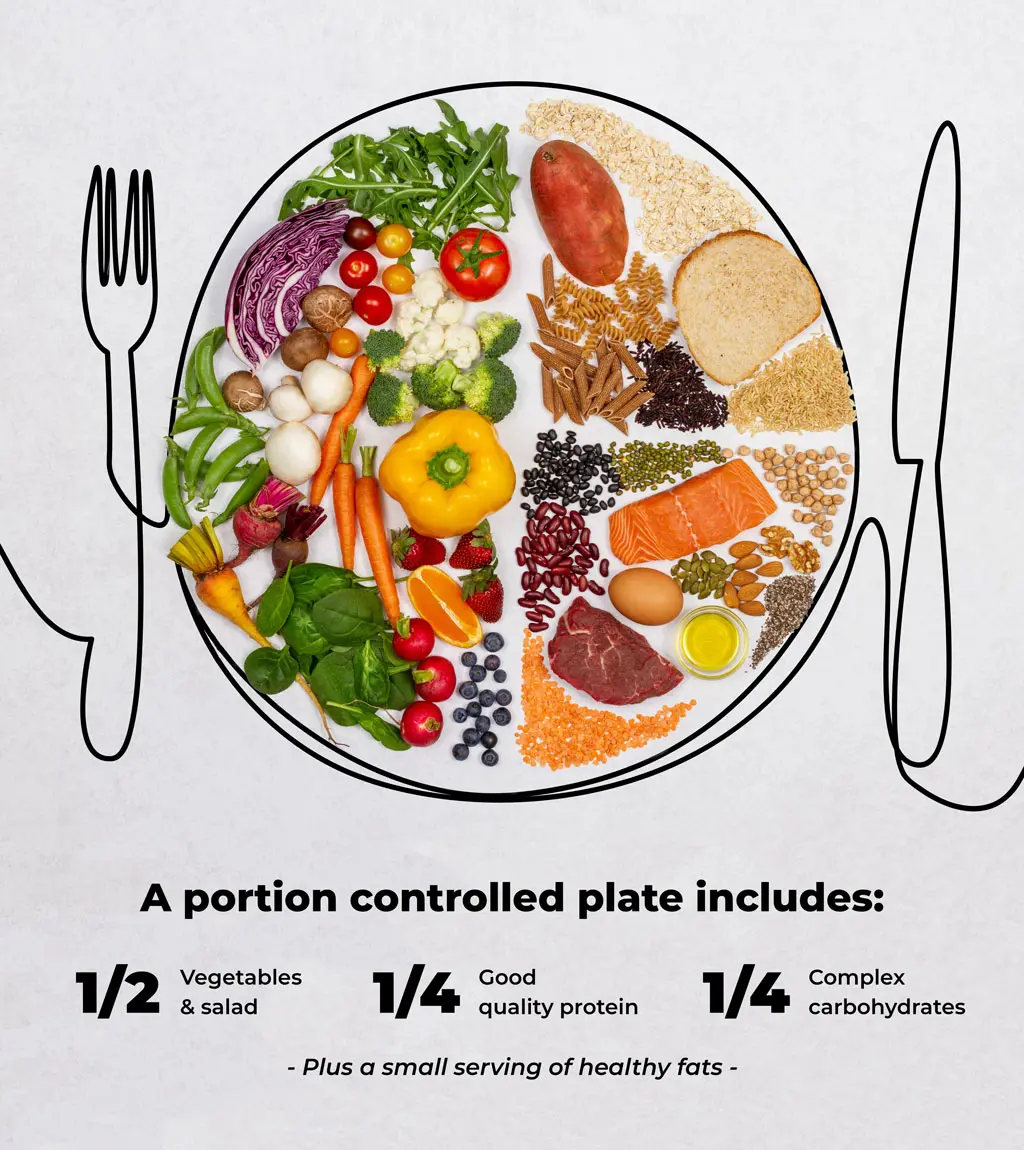
🥦 What Should You Eat on a Calorie‑Reduced Diet?


Eating fewer calories doesn’t mean starving yourself — it means choosing nutrient‑dense foods that keep you full longer:
Smart Calorie Choices
- Lean proteins: chicken, turkey, fish, tofu
- Vegetables: leafy greens, broccoli, peppers
- Whole grains: brown rice, quinoa, oats
- Healthy fats: avocado, nuts, seeds, olive oil
- Fruits: berries, apples, citrus
➡️ These foods give your body more nutrients per calorie and help control hunger.
Tips to Stay Full on Fewer Calories
- Add fiber (veg, beans, oats) to meals
- Include protein with each meal
- Drink plenty of water
- Avoid empty‑calorie foods (sugary drinks, sweets)
For personalized meal ideas, visit our guide on Healthy Meal Plans for Weight Loss.
🏃♂️ Should You Combine Diet With Exercise?
Calorie intake is crucial, but physical activity boosts weight loss and improves health.
Why Exercise Matters
- Increases your calorie burn
- Builds muscle (which raises your metabolism)
- Improves heart health
- Enhances mood and energy levels
Both strength training and cardio are effective:
- 💪 Strength training preserves muscle while losing fat
- 🏃♀️ Cardio increases daily calorie burn
You don’t have to work out like an athlete — even daily walking helps!
📈 Tracking and Adjusting Your Calories
Weight loss isn’t always linear — your calorie needs can change as you lose weight.
Monitor Your Progress
Keep track of:
- Your weight (weekly, not daily)
- How your clothes fit
- Your energy levels
- Your hunger and cravings
If weight loss stalls for more than 2–3 weeks, consider:
- Reducing calories slightly (by 100–200)
- Increasing activity
- Reassessing your food choices
⚠️ Rapid weight loss or extreme calorie restriction can be unhealthy. When in doubt, consult a nutritionist.
🛑 Common Calorie‑Counting Mistakes to Avoid
Here are some pitfalls you should be aware of:
❌ Underestimating Portions
Eyeballing portions tends to undercount calories. Use a food scale or tracking app if necessary.
❌ Ignoring Liquid Calories
Drinks can be sneaky:
- Sugary coffee drinks
- Sodas
- Alcohol
- Fruit juices
These add calories fast without making you feel full.
❌ Not Adjusting as You Lose Weight
As you lose weight, your TDEE drops. If you keep eating the same amount, weight loss can stall.
🧠 The Psychology of Eating Fewer Calories
Weight loss isn’t just physical — it’s mental too.
Set Realistic Expectations
Long‑term weight loss is a marathon, not a sprint. Celebrate non‑scale victories like:
- Increased energy
- Better sleep
- Clothes fitting better
Stay Consistent
Don’t aim for perfection. Aim for consistency.
❇️ A small deficit sustained over months is more effective — and healthier — than extreme dieting.
For motivation tips, check our article Staying Motivated on Your Fitness Journey.
🧾 Summary: How Many Calories Should You Eat to Lose Weight?
✔️ Your ideal calorie intake for weight loss is based on your TDEE
✔️ Subtracting about 500 calories/day is a safe starting point
✔️ Go below 1200 Calories for women and 1500 for men only with medical supervision
✔️ Choose nutrient‑dense foods
✔️ Combine calorie control with exercise and lifestyle habits
✔️ Track progress and adjust as needed
The bottom line: Calories matter — but quality matters too. Focusing on both will help you lose weight in a safe, sustainable way.